
The formal work of COP17 began on Monday 19 October with an opening plenary that did three things: it handed the chair to Armenia, it put the first global review of the biodiversity framework on the table, and it let every major negotiating group say what it wants. The headline is not a decision. It is a map of the disagreements, and most of them are about money.
The plenary: a new chair and the rules of the room
Colombia, which held the COP16 presidency, handed over to Armenia. Armenia’s Environment Minister, Hambardzum Matevosyan, was elected COP17 President for a two-year term, according to the Public Radio of Armenia and Xinhua. In his acceptance he promised to serve all Parties impartially, to build consensus, and to turn commitments into real change. He also argued that gaps in reporting do not necessarily mean gaps in implementation.
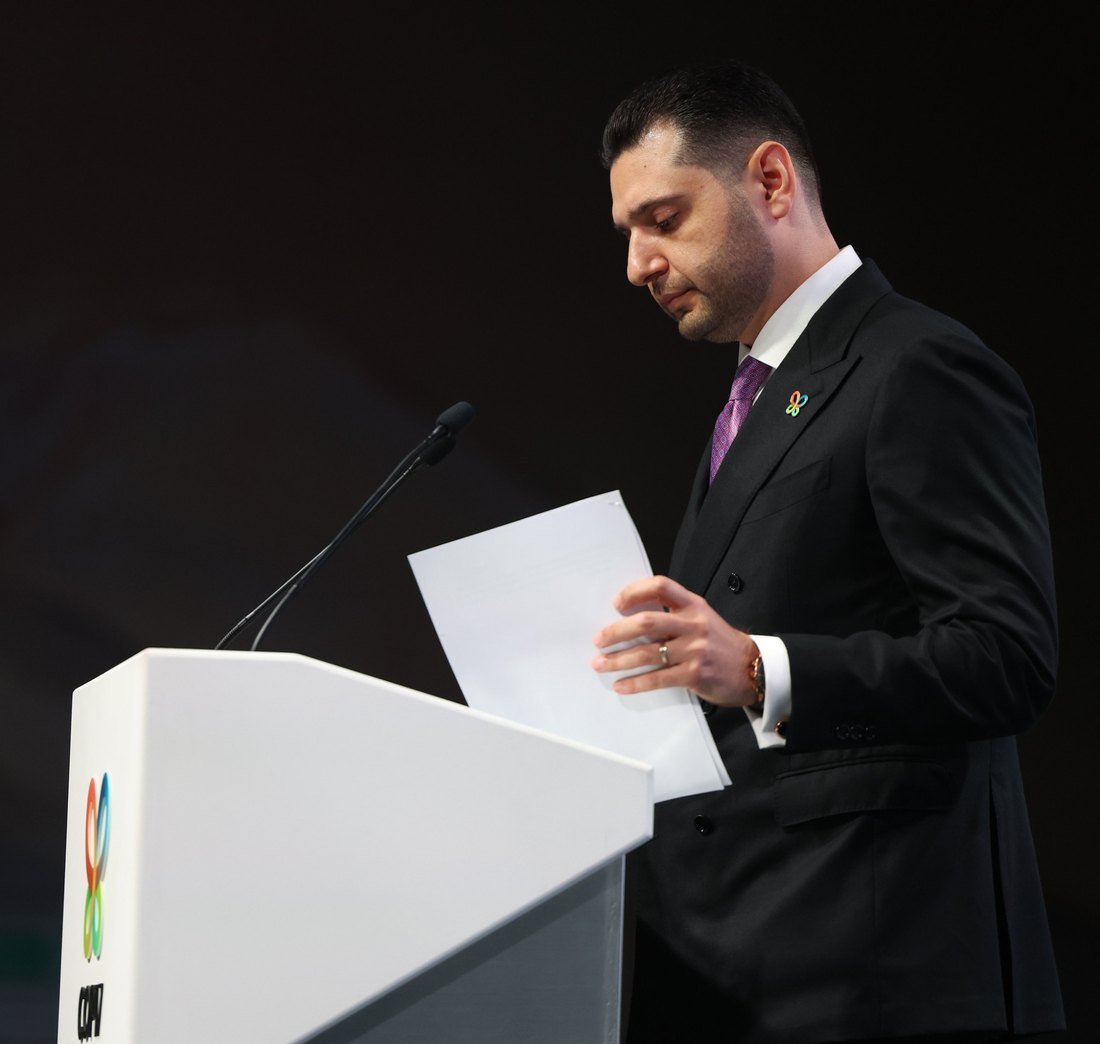
The housekeeping matters because it shapes the next two weeks. According to the UN’s unofficial transcript of the session, the COP17 agenda was adopted after Russia suggested merging item 10(d) into item 13; the President treated it as a suggestion rather than an objection. The agendas of the Cartagena and Nagoya protocol meetings were adopted without objection. Most items will go to one of two working groups, and to save time individual Parties were not invited to speak: only regional groups, with four minutes each.
Armenia’s Prime Minister, Nikol Pashinyan, had set the tone at Sunday evening’s opening ceremony, saying that only four years remain until 2030 and that the gap between ambition and implementation is significant, as reported by ARMENPRESS.
The global review: holding up a mirror
COP17 hosts the first global review of collective progress under the Kunming-Montreal Global Biodiversity Framework. The Convention’s Executive Secretary, Astrid Schomaker, said progress is real but not fast or large enough, and named three words for the fortnight: accountability, alignment and acceleration. She pointed to finance and harmful incentives as the widest gaps.
The numbers in the room were sobering. In the transcript, Armenia and Colombia both said that fewer than half of national targets are assessed as on track. Common Dreams, reporting on the start of the conference, put it more bluntly: the world is not on track to meet any of the framework’s 2030 targets.
- The EU, the JUSCANZ group (which includes Canada, Japan, Switzerland and the UK), Asia-Pacific and the small island states all asked that the review decision be concrete and actionable.
- Asia-Pacific added a condition: identifying gaps must lead to supported measures, not to extra burdens on countries.
- China, presenting the outcomes of the Kunming Dialogue, said the gap between action and ambition remains significant, especially for developing countries.
Positions on the money
Almost every group said the same thing in a different way: the framework will not be delivered without finance. The differences are about who pays, through which channel and on whose terms. These are the positions as recorded in the UN’s automatic transcript, which is unofficial and may contain errors:
- Africa Group (Senegal): means of implementation have not arrived at the scale needed. It called on developed countries to meet their finance commitments and wants predictable money, capacity building, technology transfer and fair benefit sharing from genetic data.
- Latin America and the Caribbean (Jamaica): the world is off track. It raised the finance gap, falling aid, debt and limited fiscal space, and said innovative or South-South finance must not replace developed countries’ obligations. Many countries have received nothing from the Global Biodiversity Framework Fund.
- European Union (Ireland): open to innovative sources of finance, wants harmful incentives phased out, and wants the contributor base broadened. It said the Cali Fund should be reviewed at COP18.
- JUSCANZ (Norway): the 2030 targets will not be met without faster implementation, and the list of developed countries with finance obligations under Article 20 should be reviewed to widen the resource base.
- Arab Group (Saudi Arabia): pointed to its own pledges and warned against going outside the scope of Article 20 or reclassifying member states. This is the sharpest counterweight to the JUSCANZ proposal.
- ASEAN (Philippines): asked Parties to deliver the framework’s goal of $30 billion a year in international biodiversity finance by 2030.
- Small island states (Antigua and Barbuda): finance must be adequate, predictable, accessible and timely, through a permanent financial mechanism, and must not add to debt.
- Like-Minded Megadiverse Countries (South Africa): Article 20 obligations must be met with new, additional and accessible money.
Genetic data and the Cali Fund
Digital sequence information, the genetic data from nature held in global databases, is the second fault line. COP16 created a mechanism and the Cali Fund so that companies using this data share the benefits. The Africa Group said few enterprises have paid in so far. Business for Nature said business is committed to a workable mechanism. The Like-Minded Megadiverse Countries and Indigenous peoples asked that at least half of the fund’s support go to priorities defined by Indigenous peoples and local communities. The CBD Alliance, a network of NGOs, went further and rejected biodiversity offsets, carbon offsets and nature markets.
Through a child and youth lens
Young people did speak in the opening plenary. The Global Youth Biodiversity Network, speaking for 80 chapters and 1.25 million young people in 172 countries, told delegates that to close the implementation gap, the world must close the justice gap. The Convention’s Executive Secretary and the new President both listed young people among the groups whose participation must be broadened, and the Women’s Caucus reminded the room that fewer than 10% of Parties have reported on their gender action plans.
What the reports I could read do not show is any statement focused on children. That matters, because UNICEF says children and young people are disproportionately affected by biodiversity loss and have a right to take part, grounded in the Convention on the Rights of the Child and UN General Comment No. 26 (UNICEF Armenia).
As a member of the UNICEF Global Delegation, that is my thread for the next two weeks: making sure that when the review and the finance decisions are written, children and young people are named, and that participation means access and a say, not just a seat in the audience.
What to watch tomorrow
- Tuesday morning’s session on Nagoya Protocol implementation, followed by agenda item 9, and the first meetings of the two working groups.
- Whether the JUSCANZ proposal on reviewing the list of contributing countries gets traction, or is blocked by the Arab Group and others.
- How the text of the global review decision is framed: concrete and actionable, or general.
- The UNICEF delegation meeting at the UN Pavilion at 12:00, on my calendar.
Follow where I am each day on my COP17 schedule, and the daily news in the Newsroom.
Sources
- UN Transcripts (2026), Opening Plenary: UN Convention on Biodiversity, COP 17. Automatic and unofficial transcript. https://transcripts.un.org/en/asset/k16/k1690hk36r
- Public Radio of Armenia (19 Oct 2026), Armenia officially launches COP17 in Yerevan, Hambardzum Matevosyan elected President. https://en.armradio.am/2026/10/19/armenia-officially-launches-cop17-in-yerevan-hambardzum-matevosyan-elected-president/
- Xinhua (19 Oct 2026), UN biodiversity conference begins formal sessions in Armenia. https://english.news.cn/20261019/9fce3f7e48bf4373b276f7be9191f29f/c.html
- ARMENPRESS (18 Oct 2026), Pashinyan opens COP17. https://armenpress.am/en/article/1263152
- ARMENPRESS (19 Oct 2026), Armenia assumes COP17 presidency for two-year term. https://armenpress.am/en/article/1263196
- Common Dreams (19 Oct 2026), As Biodiversity Summit Begins, Systems That Sustain Life on Earth Are Under Threat. https://commondreams.org/news/biodiversity-cop17
- UNICEF Armenia, What adolescents and young people should know about COP17. https://www.unicef.org/armenia/en/stories/what-adolescents-and-young-people-should-know-about-cop17